THEINDIAN

  • Subscribe to our RSS feed.
  • Twitter
  • StumbleUpon
  • Reddit
  • Facebook
  • Digg

Monday, November 26, 2012

A Commentary on Cultural Differences

Posted on 7:57 AM by Unknown
Statutory warning: Those who can’t afford to risk their temperaments with hardcore cultural satire, please close this tab by clicking at the ‘X’ button on your right. 

Image Courtesy: Google
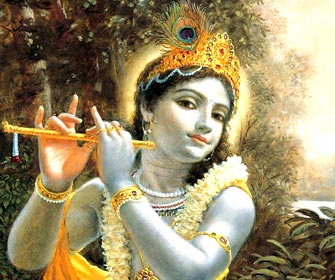
Cultural differences are interesting to watch and study. Sometimes, they are as excruciating an experience as watching news in any Malayalam TV channel. At the same time, occasionally, these differences are humorous to observe as well. For example, the social science text book I studied for my eighth standard, says that Kerala is the America in India in the standard of living, and later in my Masters programme, I learnt that it is not just in standard of living, but in many aspects, such as cultural diversity and the way every culture is assimilated into its mother culture, this state is just like the melting pot, America.

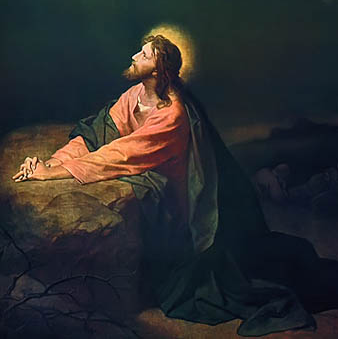
Well, this can be said about the general Indian cultural context as well. Whoever you are, whichever religion you belong to, you have to rub the sandal paste on your forehead for Hindu festivities to show your secular feelings, or else you will be walled in. You have to wear the white cap or tie a hankie on your forehead for Muslim festivals as well (especially, in Northern parts of India). And if you want any more examples for how other cultures are melted and mixed together, just think about freedom of speech. You might have come from any part of the world, any state within the same nation, and you believe in this notion called ‘freedom of speech or expression’. Suppose a religious leader dies and you are in desperate situation to reach a hospital to treat your dengue fever.
Image Courtesy: Google

Hartal!


The religious leader is dead. There must be some protest against the almighty or yama, or the death angel or the demigod of death, which ever you think convenient for your beliefs, to remedy the death of their leader. So the best way the late leader’s followers find is Hartal. Even if you do not belong to the place where the Hartal is called for, you have to consent. Do you dare to write your protest over the Hartal? If you do and you write, then what? The next day, your family will mourn your death.

Let’s now move on to some gruesome aspects of cultural difference.

In a European or American context, when a man and woman walk around together, it will be called ‘natural’. And when two men walk around hand in hand, it would be called not quite so natural—at least some will surely agree with me (a heterosexual). See, I am just pointing out what people say, just pointing out a reality that is all. In Kerala, if a man and woman walk around together, that will be called immoral traffic. And if two men walk hand in hand, that will be cheered up and people would say, ‘Look, learn from them. What a friendship, yaar!’
Image Courtesy: Google

Homosexuality or heterosexuality, it’s always a matter of choice and here I do not judge any one with my narrow kaleidoscope of satire. But there is one thing we all must be very cautious, Indian or American or European or Arab or African or Chinese or Keralite. It is the amount of hatred that is in our world. I am just expressing my concern for all those who are being cornered due to the so-called cultural differences and suffer due to mistakes, not their own. And by the way, one more gruesome thing that I forgot to tell you about; it’s actually to those who had already read, Fifty Shades of Grey. Don’t think about publishing such a book in India, even though pornography is legal here. You will be banned for the rest of your life or stoned to death or your family will be cordoned off from the rest of the world.
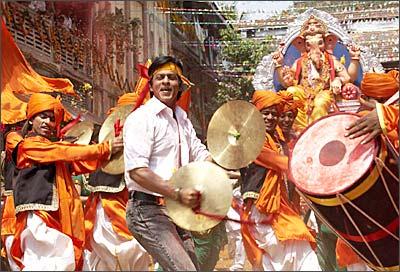
Image Courtesy: Google

Here is a bonus secret. If one follows this in life, one can have everything one wants—money, glamour, secretaries, interviews, contacts with underworld dons and religious leaders and politicians, and finally the label of superstar. Yes, you guessed it right; I am talking about how to be a successful Bollywood superstar. A certain difference in cultural aspects between another prominent film industry, Hollywood, is the key in understanding the secret of success in the world of Bollywood. In Hollywood, the criteria to becoming a superstar undoubtedly rests upon an individual’s ability (linguistic ability) to blurt out the F-word in diverse accents and under all possible situations, even during giving birth to a baby! In Bollywood, things are a bit different. You are saved from the F-disaster. In Bollywood, one must know how to dance. Then one must get a huge Ganesh murthi, the idol of Lord Ganesha, the god with the face of an elephant. The size of the murthi is apparently proportional to the magnitude of your success. The next step is to dance around the idol and do not hesitate to believe, you are the next superstar!

Question for readers: What are the causes for cultural differences?                                 
Read More
Posted in Celebrations, films, international, New, social | No comments

Saturday, November 24, 2012

Embarrassing but Crucial!

Posted on 11:50 PM by Unknown
Image Courtesy: Telegraph.co.uk

What I intend to talk about is the chasm between what one believes and one talks about in a teacher’s life. What inspired me to think in this stream is the post I made in my blog lately. It was about how a poem by Rabindranath Tagore has been taught in colleges and universities and how I see it. The poem is never given its spiritual significance and is never placed against the realities of the formless world one is constantly in contact with, the world of spirituality, or the worlds of psychic realities.

Spirituality gives us glimpses of what lies beyond what we know and see in form around us, in the so-called physical world. Another route to reach to those non-formal realities or non-physical realities is psychic reality—the unique world of the mind.

Teaching this poem or any other book, the teacher is forced to tell the students about the ideas and ideological backgrounds that supposedly played crucial roles in writing of a particular work of literature, even if this information is not given apt or sensible. What is true should be kept at bay, instead what is given in course material had to be fed directly to the young minds, which will be then handled down to their younger generations and they then handle this knowledge (if we can call it so) to their next generation and so on. This is one reason why a single type of education becomes the base of a large culture. This substantiates the idea why so many people believe in the same thing even if proven otherwise, in a vast demographic.

Rather than sweeping the smoke, let me invite a solid ‘real life’ example from my own life here. Mr. Example, would you please unveil yourself here, in front of us, people who think and smoke their heads like it’s a piece of weed?

What? You will consider? Oh, No, Mr. Example, I need your presence now itself. Can you please come over?

Oh, No, Mr. Example, don’t say that!!!!

Did you hear people, what Mr. Example replied to my request of making a guest appearance here on my blog, on this humble virtual institution of words and pictures?

He says, as we have already denied ‘reality’ or at least, we do not seem people with much respect to what wonders realty is capable of doing for mankind, he won’t set foot in this space.

Well, it’s my mistake. I apologize, Mr. Example. Ok, let me make it clear. I did not deny reality. The attempt was to point out how often our educational system denies a particular possibility of reading a work of literature. OK? I just said there are different ways to read a particular poem or story, etc. OK now?
Thank God! So here is Mr. Example, friends, although he had a slight discomfort about what was going on in the blog, he took the time to analyze the factors closely and to arrive at a just decision, personally. And here he is!

Image Courtesy: Google
Critical Reasoning is a text book prescribed for general English course in graduation classes throughout Cannanore. This text book, professes that only through reason, rational thinking and logic one can achieve integrity and maturity of thoughts.

The question is not whether we see these ideas as true or not, but it is if they are acceptable in an academic sense or not. When I say academic sense, I mean, the tendencies to go deeper into any idea or thought through variegated thinking strategies. The textbooks that so stress rationality tend to undermine the factors that determine life, much of them purely random and co-incidental, according to the same science these textbook makers proclaim themselves of service at.

According to Carl Gustav Jung,

The irrationality of events is shown in what we call chance, which we are obviously compelled to deny because we cannot in principle think of any process that is not causal and necessary, whence it follows that it cannot happen by chance. In practice, however, chance reigns everywhere, and so obtrusively that we might as well put our causal philosophy in our pocket. The plenitude of life is governed by law and yet not governed by law, rational and yet irrational. Hence reason and the will that is grounded in reason are valid only up to a point. The further we go in the direction selected by reason, the surer we may be that we are excluding the irrational possibilities of life which have just as much right to be lived.

[pp: 49, On the Psychology of the Unconscious, 1943]

The above mentioned part clearly supports my argument that what the course-structures want the teachers to teach do not always be the right lessons. They could be wrong too, in this case, undermine “the irrational possibilities of life which have just as much right to be lived.” This conflict between people who prepare materials and those who teach the prepared teaching materials is a silent one [only in some cases teachers dare to complain, since most of the people on the top are well guarded by the power of their position and by different political affiliations]. Though silent, this conflict is the prime corroding element in the educational sector in India at present.

Image Courtesy: Google
It’s embarrassing for a teacher to know what they teach is simply nonsense or only part of a truth, as in the case of the poem by Tagore. In many instances, teachers tend to open up to students and reveal certain information in the classes as part of giving them an out-of-syllabus experience in an attempt to cover this chasm I mentioned at the beginning. However some prejudiced interventions of certain Heads of the institutions bar the teachers from taking such consolatory measures towards their students. In most cases, the Heads or the responsible persons are often part of those political organizations that harbor those who prepare the course materials. This sinful affiliation permanently disables that part of their brain with which a human being is usually supposed to show commiseration in dealing with others. Thus such Heads are reluctant to take the decisive step in leaving the teachers free.

Still, it’s not entirely a hopeless system. Through its Himalayan paradoxes and the chasms it opens up, it gives the possibility of observing such tendencies up-close. One such instance is this article itself. Those slaves of such systems are an embarrassment, indeed, for learning community, but they are crucial too. These people have to be there in their positions, for at least the binary of wisdom and stupidity to be demonstrative.  
Read More
Posted in social | No comments

Friday, November 23, 2012

'Country' could be you

Posted on 10:14 PM by Unknown
I never had much guest posts in my blog. From what I recall, it was only once, and it was from Fernando Pessoa, the well-known and Portuguese poet. It was a passage written by him that I included, years back. At this moment, I think about guest posts again. The reason is very extraordinary and simple at the same time.

For the past few days I have been thinking a line from a poem by an Indian poet. This is the line “Where the mind is without fear and the head is held high.”
This line is from Rabindranath Tagore’s Githanjali, a collection of spiritual songs, for which he won the Nobel Prize for literature. He was the first and last Indian to bring the Nobel here. But that doesn’t count as much as how deep his verses are. None of the other poets in the tradition of Indian English literature have been able to bring such a depth within such a concise verse format.   

I taught this poem at the university and studied it myself as a young graduate. In all these years, most of the courses in Literature, teach this poem as a political poem, as an odd one in the collection of spiritual and philosophical verses.

Here is the complete poem:
Image Courtesy: Google

Where the mind is without fear and the head is held high 
Where knowledge is free 
Where the world has not been broken up into fragments 
By narrow domestic walls 
Where words come out from the depth of truth 
Where tireless striving stretches its arms towards perfection 
Where the clear stream of reason has not lost its way 
Into the dreary desert sand of dead habit 
Where the mind is led forward by thee 
Into ever-widening thought and action 
Into that heaven of freedom, my Father, let my country awake 
Rabindranath Tagore

What propels the reader to take this poem as a political statement by Tagore might be the word, “country” at the ending line of the poem. The simple consideration of a possible metaphoric status of that word can reveal an altogether different and philosophical side of the poem. The word country could be suggestive of the human stature. It could be body, or self. You or me. what if the word suggests our mind? Then the poem, without any question, becomes a garden of varied flowers, the ones that never bloomed anywhere near and with such magnificent charm that it brings no others in comparison. 

Read More
Posted in LOVE, New | No comments

Wednesday, November 21, 2012

New Blog Description

Posted on 11:56 PM by Unknown
Image Courtesy: Google

Without any impersonal, undramatic statements, or any negations of any of my previous blog descriptions, I change my existing blog description, “My Freedom is your Beauty” to “is an act of finding an extension for existence.” I subsequently changed my background image as well, along with some of the colours of the titles.

The question, if these changes can carry any significant difference in the contents of the blog or in the furthering of the different dimensions of existence, can only be answered by time. But if one looks at the current Description, “…is an act of finding an extension for existence,” one can get a glimpse of the truth that lay hidden before us in time. This fragment of sentence, with its hidden subject acts as a reminder of all human present, the idea we all understand as ‘now’. In our ephemeral, yet eternal moments of the present, the now, the beginning and the results are unknown to us, kept away from us, sometimes buried in our memories.      

Here, the questions are, ‘what is an act of finding an extension for existence?’ or ‘Is it The Indian Commentator, that is the act of finding an extension for existence?’ or ‘Is the Indian Commentator an act? Isn’t it a material, a virtual material?’ or more serious and significant questions such as ‘Does existence require an extension?’ Or ‘Doesn’t existence is enough and complete in itself?’

To all these questions I owe the impetus of this change of blog description. These questions did not follow; on the contrary, the Description followed the questions. My life has encountered a significant event that made me ask myself the latter part of the questions I wrote above—about if existence actually needs an extension.

I found the path to answer. But I am sure; this path will lead me to many other paths and many other forms of knowledge. Perhaps, I would learn that none of these questions has answers; who knows. My life has been transformed into a search for the answers to these questions. This is the basic reason why I thought of transmutating one of the virtual organs of my communication with the external world into a similar form into which I changed, or at least a reflection of some sort of change, if not successfully replicating the exact changes that occurred in me, in words and pictures, according to that very conviction that made me write this passage.

Image Courtesy: Google
Of course, what else is ‘change’ other than convictions and negotiations with what we know and we learnt. The path I found towards the answers of the spinal questions of existence is perhaps, a personal one. It doesn’t seem fit to me to reveal it here on this platform, since there are many people reading it and some of them might find it extremely obsessing that they might use it in unintended ways. And it could also be possible that some of you might find it ridiculous. So let me keep my path to my own world, the little personal space I got. But still, as a matter of fact, one will learn about it in the future posts, if one is careful enough to read them closely, and in my future writing, God willing, in other platforms and occasions.

I surely feel it necessary to find or attach some extensions to human existence. These extensions could be possible in many forms and in many names. About one thing I am absolutely sure, now, this is the conviction I reached at and this is the change I wanted to make from this day onwards: yes, existence in itself is not complete. It requires extensions.

Let’s start out with a prayer.

O my God, I love you with my whole heart and
above all things, because you are infinitely good
and perfect; and in my love for you, I love my
neighbour as myself. Grant that I may love you
more and more in this life, and in the next, for all
eternity.

Still, I must add that my convictions about the path I found toward answers in life are not without unsteadiness. A constant urge to know the truth and not to waste away this life anymore hangs with all these decisions and convictions like a peacock’s tail.

It must be just a glimpse of the path that I found. But I felt happy and at home. My soul feels joy and enthusiasm for life. All because I saw this glimpse, and so it is to follow that very glimpse of life, I would like to use my capabilities. How strange it is, all my capabilities seem to come from that very same path I glimpsed during these days. 
Read More
Posted in Life Scrap, New | No comments

Monday, November 5, 2012

Procrastination—Not a vice, not a boon either.

Posted on 8:30 AM by Unknown
Image Courtesy: Facebook

Procrastinationis one of the dramatic catalysts that work its way through to the development of plot in Shakespeare’s Hamlet. The postponement of action drew Hamlet from normal struggles to madness. Of course, it adds to the drama. However, procrastination is no good a prop in a writer’s arsenal. His characters, of course can exhibit this as a favourable character flaw. But he himself should be kept away from this character trait.

Image Courtesy: Google
Procrastination, evidently, is not a character trait at all; however, for the use of a better word, we can use the phrase--‘character trait’. Whatever the reason is, when someone decides today’s job to be done tomorrow, he or she is procrastinating the work. It mainly results from the blind confidence of a tomorrow that is at the same time favourable and secured, as imagined by the writer. Here, it is good to remember John 9:4, “One must work the works of him that sent me while it is day; the night is coming when no man can work.” This passage directly floods the concept of a secured and assured tomorrow with uncertainty and a certain sense of unpredictability.

Although, in every writing programme, this trait (procrastination) is the most degraded of all, the writer in practice of his craft, at least, occasionally finds procrastination resulting in favourable and creative results.  For example, certain stories or poems, when kept for some time without being penned down, yields new ideas that can make the piece of work better than how it was initially conceived.
Image Courtesy: Google

But if you are a writer, looking forward to a professional career and still you keep pushing your assignments and stories for a farther date then you are doing real harm to yourself. Here, procrastination can bring doom. The only major difference between a professionally successful writer and an amateur is that the professionally successful writer finds ways to meet his deadlines and an amateur finds ways to postpone a deadline. Talent doesn’t make you everything. So read the rest later, finish the day’s work, now. 
Read More
Posted in New, social | No comments

Tuesday, October 30, 2012

The Krishna Key by Aswin Sanghi: Book Review

Posted on 12:25 AM by Unknown
Image Courtesy: Google

Are you a lover of thrillers? Have your senses adapted enough to understand the line where characters and plot become one and where characters trace their trajectories straight into the readers’ hearts? This second question is especially complicated, since even some writers cannot point out where this line is. The best demonstrative strategy is to take you to some of the books as instances that unsettled the world and left it on the mercy of imaginative survival; The Da Vinci Code for example or Hunger Games. We loved their story line, their plot and of course, Robert Langdon or Katniss Everdeen, they are vulnerable and their pain is intimate for us.

Image Courtesy: Google
The Krishna Key is based on conspiracy theories that suggest that the Vedic civilization is the mother of all civilizations. Aswin Sanghy compares the idea of a supreme and extremely developed civilization to the lost city of Atlantis. By doing this he ascertains the significance of an all pervasive Vedic impact in all wakes of modern demographic as well as technological advancements. Aswin Saghi connects all the conspiracy theories and academic research through a fictional narrative, which feels artificial and intentional.

Image Courtesy: Google
The Krishna Key is Aswin Sanghi’s third book, his first two being The Rozabal Line and Chanakya’s Chant. Published by Westland, the book bears, much to its own damage, the ominous label “Thriller” on its back cover. A professor of History, Ravi Mohan Saini, who as the readers realize later, possesses skills of a wannabe detective, can be taken as the protagonist of the story, although there are no scenes in this novel which suggests any one character dominates the ideological as well as structural aspects of the novel. The Krishna Key is all about a search to find a powerful object hidden from Vedic times by the lineage of Krishna, the yadava chief. Although at the start of the novel, this powerful object seems to be  a weapon, later, as the novel progresses, Sanghi tell his readers that this object is not a weapon, instead something else with immense potential to transform things. More comments on this regard might spoil the plot for future readers. Even the book begins with a warning that looking into diagrams and the pages to come might spoil the plot. On many occasions the progress of the story is not natural, but from the author’s hidden squeeze to the plot.     

Ravi Mohan Saini has three friends, one of which was murdered in the start of the novel. The murders continue until the end of the book, and even Ravi himself was fatally wounded once and locked up to die towards the end of the story. But murders or blood do not grab the attention as much the historic and mythical connection Sanghi unearths among these characters and their lives, crossed at the chaotic juncture in the present day India. Taarak Vakil is a psychotic serial killer, who believes him to be the Kali avatar of Vishnu, which is the tenth avatar of the Hindu god of ‘sthithi’ or preservation and sustenance of the universe. At each spot of his murder, Taarak leaves a Sanskrit verse and on the forehead of his each victims a sign of Vishnu, such as the mace, lotus, conch, etc. The motive of Taarak to do all these killings is still unclear and that invariably affects the plot of the story as well. As I said before, the author in more than one occasion just squeezes it out. All characters are possessed by the urge to either find the mysterious object or to catch Taarak and his ally, his Mathaji. Which of the above mentioned motives potentially drive them toward the end of the story, however, or to reveal all the pseudo science aka conspiracy theories is a question that weakens the quality of the novel.  
Image Courtesy: Google

Through out the plot of the novel, Sanghi also investigates the concept of Vish and Shiv, asserting the vedanticprinciple that they both are one and the same. Vishnu is the Supreme Being and Krishna being Vishnu’s avatar had brought to the earth with him some secret powers. The Krishna Key is the search for this power, hidden somewhere in India. Ravi and the police inspector Radhika Singh, who in first part of the story chases Ravi as he was accused of the murder of his friends for the possession of the seal of Vishnu, chases the real killer through Kailas to a Vrindavan Temple destroyed by Aurangazeb, the Mughal ruler. Radhika tries to protect Ravi from Kalki.    

The story begins from the finding of four clay tablets from the ancient Dwaraka submerged under the sea somewhere near Gujrat(a theme Sanghi apparently borrowed from the History Channel documentary “Ancient Aliens”) and ends at supposedly showing reader what the legacy of Krishna to mankind was. Although at the end of the book a reader might wonder what his legacy actually is—the message delivered by a couple of saints in a mysteriously esoteric manner, “The Philosopher is important not the stone,”  or the mysterious object itself.

Image Courtesy: Google
According to Sanghy, the Vedic civilization possessed occult as well as scientific advancements such as nuclear weapons, one of which is well know as the ‘brahmastra’ used during the battle of Kurukshetra. Even though the characters are disappointingly flat and stereotypic in their attempts to do be unique, such as Radhika Singh who recites the name of Hari all the time in her mind and counts the beads in her rosary or Ravi who appears to be a mere mouth piece of the author eager to tell readers what all material he had researched to write this book. In fact The Krishna Key robs Krishna of his godly image and leaves him human and political. “…replied Saini; “Krishna was a great statesman and strategist. He probably led a rather series life.” (320-321)

Ideas such as India is the cradle of all civilization and that all the modern technological advancements including, airplanes, computers and the internet were developed in India for the first time, but in some ancient past, are part of a propagandist language present in the country from a long time.
Image Courtesy: Google

The technique of Aswin Sanghi in this novel very much resembles his previous one, Chanakya’s Chant, which juxtaposed the Mauryan age story (which was again ‘inspired’ or lifted as they say, apparently, as Sanghi himself acknowledges in the works cited page of his book) with the story of a political upheaval in the centre of Indian democracy. In Krishna Kay, Sanghi pastes the summarized version of Mahabarata in the beginning of each chapter. This doesn’t necessarily appear a hindrance to any sort of aesthetic appreciation of the novel. On the other hand it gives the readers a fairly good informative background in Mahabarata. This along with the works cited list at the back of the book provides information plus entertainment. As a novel The Krishna Key with all the hypotheses and conspiracies cramped together, forgets about the human beings that live within its fictional and cultural space. It acknowledges the history but forgets the lives on which it had been written.
Image Courtesy: google

If anyone feels inclined to find in The Krishna Keya similarity with The Da Vinci Codeor Angels and Demons by Dan Brown in its ambition, it’s not merely a coincidence, but intentional. The novel is ambitious but never rises from the bottom level in delivering it. If The Da Vinci Code reminds us of The Krishna Key in some ways, it will be as an incomparable dupe. 

This review is a part of the Book Reviews Program at BlogAdda.com. Participate now to get free books!
Read More
Posted in book reviews | No comments

Friday, October 26, 2012

City Thieves

Posted on 5:52 AM by Unknown
Image Courtesy: Google

Cannanore will soon become a big city, but right now, it is a small town, where people still prefer having their tea, coffee and meals from coffee houses that stinks of urine, sweat and smoke. This is not the only reason for naming it small.

Every city is like a human being. And like humans, cities have thoughts as well. Cannanore town is small is its thoughts too. Thoughts of a city are its streets. The streets in Cannanore city are quite narrow and thus I deduced my conclusion that it is indeed a small in city, small in size and small in mind.

In this small town, one evening, a coffee house was busy as a slaughter house. The slaughter house imagery partially owes its credit to the way people’s faces looked after their sojourn inside the houses for tea or meals and their puffed up pot bellies and partly it owed to the vast number of people flowing in and out.

A person in a wrinkled grey shirt walked faster towards the entrance. He placed the bill on the cashier’s table and paid the amount with changes. Without stopping there, he paced forward.

And old man suddenly came ahead from behind him and caught hold of his right hand. The man in grey shirt startled and looked back. Once he saw the old man, he dragged him forward and moved out of the coffee house to the footpath that bordered the main road and the coffee house.
“Leave me!” The man in grey shirt said. His voice was hoarse and eyes were staring at the old man.
“I know what you did there in the crowd. I saw you stealing that woman’s gold chain. Give it to me, or I will call the police,” Said the old man.
“No, YOU might have done it. I didn’t. I am not a thief,” the man said. It was not a shout, but his voice was thick enough to convey the message that he was not an easy pass for anyone that came across.
The old man stared at the grey shirt man. His eyes were not particularly powerful in their physical appearance, but they were fearless.
“Didn’t you hear me? YOU might have done it! YOU…YOU… I didn’t. Now leave my hand.”
Image Courtesy: Google

Still, stare in return.

“Leave…leave me,” and the grey shirt man started puling, and wriggling his hand free. But right then, the old man shouted again, his right hand, tight as glued to the hand of the grey shirt man, “I WILL CALL THE POLICE!”

Silence.

The man in grey shirt stopped trying to wriggle away. It seemed impossible. The grip got harder and harder and more than the grip it was the old man’s staring eyes that did some harm; they were penetrating. Also the man in grey shirt had seen the people around them started noticing their struggle. Although at first it might have seemed a friendly meeting, not it was taking a violent turn.
“OK...OK…If I give it to you, will you leave me then? Old man?”
Even though the thief had addressed him, old man, he did not look above 60. His hair was full white, though. And that gave an impression that the epithet of the thief sounded apt.

“I was a teacher, now retired. It had been my job all my life to tell my students to take the path of truth and love. I won’t hand you over to the police, because I know they don’t know how to treat people like you. But I won’t leave you either. I would want a talk with you, alone. Agreed?”

“Double OK!” the thief said without a moment’s hesitation and gave the old teacher a chain of gold.
“Why do you put it in your pocket? Go and give it to that woman!” said the thief seeing the old man’s left hand going inside his pocket.
“That woman is my wife. She went to the nearest vegetable shop to purchase some goods, after the tea we had. She doesn’t even know that her chain is stolen. It was I who found it. Otherwise, you would have escaped with it,” the old teacher said.  
“Ok. Then talk,” the thief said restless.

“What is your name? And why do you steal?”
“To feed my wife, who is very young and has not learnt any art to survive, yet. And oh, my name is Habeeb,” the man in grey shirt said.  
“Why don’t you do any other work?”
“They ask for religion, cast and contacts and sometimes experience.”
“Don’t you have any of them?”
“Yes, I do have, but what I have, is not preferable in terms of acceptance.”
“What…what did you say?” the old teacher sneered at him. The words the thief said did not fit well coming from his mouth. They were words of the learnt… what I have, is not preferable in terms of acceptance.

“You trying to infuriate with those high words?” the old teacher was angry, this time.
“No, I did not! I am sorry, if it felt that way.” the thief said, that too sounded incongruous. He seemed a man of rough features and lack of any learning, but those words and now this sorry, all seemed out of the world with him.
“You don’t expect me to talk like this? I know. But do you realize now, what those people out there selling jobs might have barked at me with when they listened to what I had to say?” the thief said with a smile.
“Why don’t you find a better job and stop stealing other’s property?” sneering at the thief, the old man asked.
“What job do you mean?”
“Sell something, or try to get a government job. As a person with such wisdom, you sure will get one.”
 “You see that orange seller there?”
“Ya”
“Can you tell me what profit means, for him?”
“The money he earns after selling his goods.”
“How does he earn it?”
“By selling oranges in prices that are higher than what he had bought them for.”
“What do the clerks in the government offices do in Cannanore right now, when it is just half past four in the evening and a lot of works can be done? Night is still hours away.”

Silence.

“I know what makes you quiet, teacher,” the thief said. “Most people in government offices know nothing about the needs of the needy or what it means to be really hungry.”
“So?” the teacher asked; now calm.
“The orange seller tells everyone that his oranges are Rs: 40 a kilo when he had actually bought it for twenty. Do you know what that means?”

The old man tried to think it through. He felt his head reeling. There was a major crisis in front of him. At this moment, everything he had taught his students all his life supporting civilized life, against stealing or any other injustice, turned into a chaos. He covered his face with both his hands and wiped his face hard. Perhaps that had felt good. Opening his eyes, he said, “You are…” but before completing his words he realized that Habeeb, the thief in grey shirt, had vanished.

Also published in: http://yourstoryclub.com/short-stories-social-moral/social-short-story-city-thieves/
Read More
Posted in Short Fiction | No comments
Newer Posts Older Posts Home
Subscribe to: Posts (Atom)

Popular Posts

  • John Grisham in India?
    John Grisham Image Courtesy: Google John Grisham is America ’s beloved writer. He writes legal thrillers that until a certain period in my l...
  • We’re the Millers: Is Jen hot or Emma?
    Warning: Spoilers ahead. Image Courtesy: Google A minor drug dealer, David Clark, one day, loses all his money. He has only one option; to ...
  • Plexus
    There is always a new book awaiting. One I have just finished; The Box by Gunter Grass. I stand up from my office chair. Like all office c...
  • Pea for English
    Image Courtesy: Google On 29 August 2013, I crossed a milestone in my teaching career. I planted a pea plant in the English class, literall...
  • The Buddha and the Terrorist
    Once the US senate unleashes the verdict, Syria will burn with missiles and bullets. The world is about to witness one more grand show of ju...
  • A Special Sunday
    Image Courtesy: Google Kalesh , an old friend of mine, entered into the confluence of marriage yesterday, in what I can surely expect, a wo...
  • Petrol Price Hike: Revelations
    Discretion advised   Irikkur-Tellicherry Road: on a quiet day When the price for petrol was increased, I thought the world would end. The ...
  • The Sky Rains Down
    The nomad curses sunlight, He takes shelter under a cloud, And gazes at the sky, Waiting the stars to shine. After the wind that reminded o...
  • Land of the Seven Rivers: A Book Review
    Image Courtesy: Google The fall began when the river started drying up. The remnants of a civilization whose culture, lifestyle and social ...
  • What Type Are You?
    The first part of the book is titled ‘The Extrovert Ideal’. As I plodded through Part One, I felt more drawn towards the tactics and means e...

Categories

  • A tale untold yet (1)
  • book reviews (35)
  • Celebrations (24)
  • films (23)
  • fun (19)
  • international (11)
  • Life Scrap (57)
  • LOVE (26)
  • Nature (9)
  • New (39)
  • poem (68)
  • Short Fiction (74)
  • social (61)
  • sports (9)

Blog Archive

  • ▼  2013 (126)
    • ▼  September (8)
      • Buddha Strikes
      • The Disease of Extroversion: Noise Vs Silence
      • The Buddha and the Terrorist
      • What Type Are You?
      • We’re the Millers: Is Jen hot or Emma?
      • Pea for English: Follow Up
      • Petrol Price Hike: Revelations
      • A Special Sunday
    • ►  August (26)
    • ►  July (22)
    • ►  June (9)
    • ►  May (16)
    • ►  April (24)
    • ►  March (10)
    • ►  February (4)
    • ►  January (7)
  • ►  2012 (67)
    • ►  December (4)
    • ►  November (5)
    • ►  October (4)
    • ►  September (2)
    • ►  August (4)
    • ►  July (8)
    • ►  June (8)
    • ►  April (3)
    • ►  March (8)
    • ►  February (12)
    • ►  January (9)
  • ►  2011 (101)
    • ►  December (9)
    • ►  November (3)
    • ►  October (4)
    • ►  September (14)
    • ►  August (8)
    • ►  July (7)
    • ►  June (11)
    • ►  May (8)
    • ►  April (8)
    • ►  March (10)
    • ►  February (5)
    • ►  January (14)
  • ►  2010 (6)
    • ►  December (6)
Powered by Blogger.

About Me

Unknown
View my complete profile