THEINDIAN

  • Subscribe to our RSS feed.
  • Twitter
  • StumbleUpon
  • Reddit
  • Facebook
  • Digg
Showing posts with label book reviews. Show all posts

Tuesday, September 10, 2013

The Disease of Extroversion: Noise Vs Silence

Posted on 6:58 AM by Unknown

Extroversionhas become the norm of success. Within the Indian context, there was a time, fifty years back when a person’s inward character was more important than how he or she performed outwardly. With the technological renaissance and the growth of new educational institutions and their revised curriculums, the culture started favouring the outgoing ones. Speaking out became the norm and silent contemplation was looked down up on as a debilitating practice, in need of some severe personality training.

Corollary to this cultural move was the rise of personality trainers in India. The boom in B-Schools in India and their promotion of the exuberant selves are examples that can prove my point. Even English language training institutes focus on the sociable side of individuals and those who cannot bring themselves up to the interactive standards are considered failures. In fact, the sheer number of such institutes nicknamed “Spoken English coaching centers” in each area, from villages to cities in India, is a proof that a culture has slowly waking up to the spell of Personality.         

In Quiet: The Power of Introverts in a World That Can’t Stop Talking author Susan Cain argues that introversion is not a bad habit, but it’s a personality type, much like what Carl Gustav Jung had postulated in the early twentieth century. Susan Cain provides the clear image of how in the US, during the early twentieth century, the ‘Culture of Character’, which was the norm up to that period, changes to the ‘Culture of Personality’. This was a result of the financial boom and the rise of the cities.
Image Courtesy: Google

In order to satiate the desire to live and survive the dream of success, showman persona was the best clothing people prefer to put on. Ever since the boom in the industry and the growth of the cities, the salesman has become a reference point for agreeable personality types.

I remember one of my old friends was so fascinated by seeing a few salesmen working in an exhibition in the city that he even fought with the two of us, who accompanied him. The two of us never gave a shot to impress the attention of the salesmen, however, our friend was playing the chimp of the zoo in front of them. The two of us were so absorbed in the exhibition that we both walked off, without shaking our heads at the salesmen or returning those warm smiles they radiated. The truth was that the two of us were uncomfortable at the thought of greeting a stranger, in other words, introverts.

Susan Cain even brings up a case against religion, in Quiet. She points out the necessity to communicate and participate in group related activities, in many evangelical groups. These activities undermine introverts. She describes it with reference to the personal experiences of a pastor named in the book as Pastor McHugh. According to Ms. Cain, “Many evangelicals come to associate godliness with sociability.” (70) Pastor McHugh had taken the Myers-Briggs personality test and realized that he is an introvert. Being an introvert in a celebrated world of extroverts and “gregarious” leaders is indeed a hard factor for him, we learn.
Image Courtesy: Google

This is where extroversion becomes pathological.

An individual loses his faith in himself and his existence just because the world around him is blindly forcing upon him an ideal of outspokenness and gregariousness. Sociability and teamwork becomes the ultimate mantra of corporate success. Only those who can afford to build a company in their garage on their own can remain introverts without the fear from intrusion from the society. Susan Cain alludes here to Larry Page and Bill Gates. The urge to be better indicates the essential conviction of a certain lack in the personality. This awareness becomes negative when it comes to professional and personal fulfillment.

“[H]ow did we go from Character to Personality without realizing that we had sacrificed something meaningful along the way?” (33) Susan Cain asks the readers. The incessant longing to influence people through outward ‘performance’ marks the Culture of Personality. The Culture of Character, however, focuses on how an individual behaves in private.
Image Courtesy: Google

Of course, both personality types have their own roles to play in our society. When only one personality type is preferred over another and all other types are suppressed, one can only wonder where healthy social behavior ends and the disease starts. Quiet: The Power of Introverts in a World That Can’t Stop Talking tells us that the introverts are not in need of some ‘cure’. The society, on the other hand, should cure pathological extroversion and accept the useful strategies, gifted naturally to the introverts. 

This book review is sponsored by Mysmartprice.com.     
Read More
Posted in book reviews | No comments

Monday, September 9, 2013

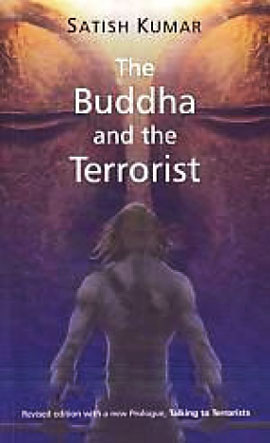
The Buddha and the Terrorist

Posted on 11:01 AM by Unknown
Oncethe US senate unleashes the verdict, Syria will burn with missiles and bullets. The world is about to witness one more grand show of justice. The face of this show is yet another binary opposite—innocence and arrogance. It is easy to confound the world by the mention of these two words, especially if one tries to find two respective faces to fit in with each of the description. Easier would be to identify this binary: good and evil. There is no question, America and other free world nations stand by innocence and good. The totalitarian regime in Syria is the evil, arrogance.

In this innocence Vs arrogance show of the Post-9/11 world Colosseum, the parties that are the innocence group would use the same types of weapons and methods to contend the arrogance side. The motto of innocence would be ‘annihilation’. Anyone who has eyes to see can see a fundamental reversal of motives at this point. This is the central theme of The Buddha and the Terrorist: The Story of Angulimala by Satish Kumar.
Image Courtesy: Google

The Prologue says, “If one person uses violence, and another calls it evil and then uses violence to stop the first, the second person also becomes evil because they are using the same means” (15). ’Talking to Terrorists’ is the title given to the prologue. It gives the idea that there is another route to approach the issue of terrorism and similar evil in the world—that is talks, or one-on-one communication. However, the question stands; can anyone talk with a terrorist, fierce in his demeanor and unflinching in his temperament? In our practical world, lead by television sets, and the internet, pundits say peace like war should be sponsored. Sometimes, they say, in order to achieve the desired order in the society, the use of a certain amount of power is necessary.

Through the story of the Buddha and Angulimala, Satish Kumar, a well-known Buddhist scholar, editor of Resurgence magazine and the author of two previous books, No Destination: An Autobiography and You Are, Therefore I Am: A Declaration of Dependence, slices through this argument of peace and war and replaces the blindness of violence with the light of Buddhist wisdom.

Image Courtesy: Google
The Buddha and the Terrorist is full of those typical scenes and contexts that invoke an ancient Buddhist village and follows the traditional way of storytelling. Pearls of wisdom whine through the words in each page and the reader is satisfied in mind and heart. Wisdom Tree published The Buddha and the Terrorist in 2012 in India. The volume contains a Foreword by Allan Hunt Badiner, the author of Zig Zag Zen and Mindfulness in the Marketplace. This volume also features illustrations by Clifford Harper.

The story takes place in the Gangetic planes in North India, in the kingdom of Savatthi, ruled by King Pasenadi. Anguli in Sanskrit means human finger. Mala is a garland. Angulimala is someone who wears a garland of human fingers around his neck. He is a psychopathic serial murderer and a terrorist, by all modern standards. He is merciless and steadfast with his cause. Much like the post-9/11 terrorists, Angulimala has a mission, a typical “holy war”, to perform. He claims that his war is with casteism, the fragmentation in the society based on caste. Angulimala continues to murder innocent people, until one day when the Buddha, the enlightened one come across. The Buddha transforms the murderer into Ahimsaka, the non-violent one, a name Angulimala takes up after receiving the transformative encounter with the Buddha.   
             
The Buddha and the Terrorist has less than one hundred pages. In its economic narration and powerful message, it’s a unique example of the high quality writings that originate in India. Sadly, such works do not come out quite often. In a scenario dominated by zombified, half-baked, and hollow love tales, The Buddha and the Terrorist stands as a watchtower to guide the paths of the lost. I am very thankful to that friend of mine, who gifted me this wonderful book.

Ahimsaka takes up the mission to salvage the world with the message of the Buddha. His words to a helpless woman are a startling revelation to one of the most complicated puzzles of human life. These words mark the depth of Angulimala’s transformation into Ahimsaka. He says, “A dead body and a dead heart know nothing of pain and sorrow. The existence of pain is a fundamental truth of life.” (86) 
Read More
Posted in book reviews | No comments

Sunday, September 8, 2013

What Type Are You?

Posted on 10:06 AM by Unknown

Thefirst part of the book is titled ‘The Extrovert Ideal’. As I plodded through Part One, I felt more drawn towards the tactics and means employed in order to equip people to be better public speakers and team leaders. The idea that if you can talk unhesitant and on a short notice, your presence would claim a considerable authority. People like fast talkers and enthusiastic go-getters. The down side, of course, is that those who feel uncomfortable about talking aloud in classrooms or in public gathering would be marginalized.

Susan Cain’s bestselling nonfiction, Quiet: The Power of Introverts in a World That Can’t Stop Talking hooked me with its subheading. “The Power of Introverts in a World That Can’t Stop Talking” is the central discourse of the book. That explains why I found Quiet interesting.

Ever since, I started attending school, no one ever found me in the school sports or arts festivals. Once, when I was forced to participate in an oratory, I stopped the speech in the middle and realized if I stayed on the stage a moment more, I would faint. Those were great lessons of human psyche to me, first hand of course, that people faint when faced with extreme stress.
Susan Cain; Image Courtesy: Google

In sports, thankfully, I never qualified the initial qualifying levels. Although I was athletic enough, a certain lack of inertia held my limbs tighter than how the tar holds the roads in Kerala.

I knew what my problem was. Someone had informed me. Perhaps, one of my parents, that I am an introvert. It sounded like ‘caveman’, for the ten year old that I was. Someone told me, when I was reluctant to go out to play with other kids that I should not behave like an introvert. That is bad, they said. ‘Bad’ meant dirty, unacceptable, secretive, and this might lead me to delinquency, they warned me.

I had thought that introversion was something like a habit, then. I did not know where I picked it up, though. Anyway, the next best thing was to ‘improve’ my personality. That’s when an individual begins the incessant struggles to fit in. Everyone who lives in such a social set up must have realized where I am driving at.

From her introduction onwards, Susan Cain drives towards the same direction. In Part One, however, what fascinated me was how a culture has found out the measures for an individual to stand out and lead. This was what I was talking about in the first paragraph.

Image Courtesy: Google
Yes, indeed, this is the quest for purification of personality, in order to attain some sort of outgoing persona. This desire governed much of my childhood. I also suspect that my increased curiosity about how to be an influential person with spoken word has to do with the profession I handle as my day job—teaching.

I meet students who are on the extrovert side, mostly, and others who are introverts. I also find ambiverts in class, a term I learnt from Susan Cain’s book. Part One of Quiet follows the history of how American culture changed from the “Culture of Character” to the “Culture of Personality”.

It is impossible for me to go back to that memory and think about myself standing in front of those many people at my school, in that public speaking competition. Although I had memorized all my speech thoroughly, the pressure was so much that I could not keep track of it at all. My dad had written that speech. I felt I let him down. I really did.


I still remember, in another speech, which was conducted exclusively in classroom, asking my family if I could pitch an idea all by myself, right on the spot, as if it is a reply or supplementation of the previous speaker’s words. Countering, arguing, and being spontaneous to the moment seemed fun. Remember, the same scared owl dropped the platter in the middle of the speech, the previous time. However, my family told me not to attempt this bravado at this point. Later in my life, I realized that I was a better public speaker, if I were spontaneous. Being an introvert, I had figured out to tackle the issue of forgetting the words I memorized and building confidence in front of the public, though I never really got a real chance as a kid to practice this.

Quiet will let you know about yourself or at least what type of person you live with, in a skillfully nonjudgmental way. 

This book review is sponsored by Mysmartprice.com.        
Read More
Posted in book reviews, Life Scrap | No comments

Monday, September 2, 2013

A Special Sunday

Posted on 8:10 AM by Unknown

Image Courtesy: Google
Kalesh, an old friend of mine, entered into the confluence of marriage yesterday, in what I can surely expect, a wonderful ceremony. I could not attend it, as I had to be present at another important appointment. I wish my dear friend, Kalesh, a very happy and fulfilling married life. I had met Kalesh for the first time during my days at the Polytechnic. I recount a story from my days at the polytechnic, in Wall of Colours.

September 1 hasn’t ceased to surprise me yet. As you would too, be surprised to learn that another old friend of mine, Jisha’s marriage too was on the same day, at another place, in the same city. She is marrying her classmate from college days.

Kannur is a small city, when you think about what it lacks. However, when one thinks in terms of distances, this city separates places with obstacles one cannot imagine coming across in a city. An instance of which, I will recount here. Before that though, I would like to wish my friend Jisha, a very happy and prosperous marriage.


As I was busy on the Sunday, September 1, I took it to visit Kalesh and Jisha on day before. On the Saturday afternoon, as planned, I reached Kalesh’s house. However, what would have been a half hour bus drive, took me more than one hour. A grumpy traffic jam made me feel like I was riding a snail. I do not own a car; otherwise, I would have spent the whole day there, trying to figure out where to pick my way out. The bus driver was a skilled man. This is how the city becomes a sorcerer, who shows things that aren’t expected.  

After spending some time at his house, I took another bus to Kannur and went straight to Jisha’s house. It was after a long time that I had met her. A deluge of memories flowed out within my mind. We studied in the same class from fifth standard to tenth. We used to be rivals in studies. Every exam result was awaited with a mix of anxiety and eagerness.
Image Courtesy: www.wallcoo.net

Although the city separated people and places miles apart, the memories that flooded in brought old times together. I did not long for the past though. It was already proved that my past was no better and glistening than my present. I prefer my present, over past, because the present has you in it, dear reader. In the past, I was just a scared and silent soul who always kept his safe distance from talking aloud and standing up for what he believed as truth.

Currently, I am reading the book titled, Quiet; The Power of Introverts in a World That Can’t Stop Talking by Susan Cain. Somehow, this deluge of memories I had, about my childhood days had a very close connection with the theme of this book. Quiet deals with introverts. It positions the introvert as a social outcast and at the same time validates a space for this personality style. Expressing my introvert nature was a constant disturbance I always lived with, during my childhood. I was blamed of being an introvert, and coaxed to become an extrovert, as if the latter is in some way a better state of being. I am very excited to be reading Quiet;The Power of Introverts in a World That Can’t Stop Talking. A book review of Quiet; The Power of Introverts in a World That Can’t Stop Talking will follow soon.

Often I get into situations, which tell me that I was in the right place and at the right time. This one was very much the like. Once again, I wish best for my friends.

The book review is sponsored by Mysmartprice.com.

Read More
Posted in book reviews, Celebrations, Life Scrap | No comments

Sunday, August 25, 2013

A Degree in Death: A Book Review

Posted on 9:33 AM by Unknown
Image Courtesy: Google
Aboy is dead in his college hostel. Everyone in the college, from hostel warden to Lecturers hates him, due to his rowdy nature. Who might have killed him? He was found hanging on a noose. Is it a suicide and murder is too farfetched an idea?

Ruby Gupta’s novel A Degree in Death is set in Mussoorie, a beautiful hill station in the north-west of India. The events in the story unfold at the campus of MIST (The Modern Institute of Science and Technology), an apt name for any grand institution to harmonize itself with the misty landscape of Mussoorie. MIST is situated in the sleepy small town of Dehradun, in Mussoorie.
Image Courtesy: Google

A boy is murdered at the college hostel and A Degree in Death is about the events that follow this murder. A parallel investigation takes place under the head of the research department, Professor Shantanu, an intelligent teacher, and an avid researcher.

Ruby Gupta is Professor and Head, Humanities, at a renowned institute. She is the author of the popular novel Maya as well as a critique on Khushwant Singh’s fiction. Ruby Gupta’s academic experience is clearly reflected in A Degree in Death. Most of the characters, including the protagonists belong to the college campus, which is typical of any other college campus in the country.

Ruby Gupta’s treatment of the events inside the college campus becomes a hilarious reflection of the situation of higher education sector in India. A Degree in Death can be called a an academic thriller, however, more than the thriller element, what lured me into the book was the language and narrative style of the author.

Image Courtesy: Google
The language of A Degree in Death is lucid and objective. The objectivity in the narrative style keeps the reader disengaged from all the characters. A Degree in Death also keeps the flavor of ‘academic English’. An occasional word or phrase would pop-up, and it will take you into one of those classrooms you had been as a graduate scholar, like nicknames for teachers for example. However, the uniqueness of A Degree in Death is in presenting the events and people in front of the reader like in a movie screen.

A series of murders occur after the first death of the boy, and this rattles the peace and complacency of the institution. The investigation police conducted is not mentioned in the novel at all. Instead, Professor Shantanu’s efforts to solve the crime take the dais. A few students help him in this. Demise befalls them too.

What makes A Degree in Death different from a regular murder mystery is its scathing criticism of the academic world. The novel points towards the ridiculously self-important academic system and the bright students who are pitted against this reality of make-belief education. The result from this paradox is resentment that breads its own offspring through warped mass imaginations and spreading of social misconduct. The imaginary college and its academic circumstances are a mirror reflection to the educational blunders we see in modern India. A Degree in Death has its forefinger pointed at this reality, and thus the work of art comes to terms with being a social criticism.
 
Image Courtesy: Amazon.com
The murder mystery paves the background for this social introspection that is satirical and at the same time in conjecture with the needs of the novel in order to play the comic relief for the grim events that would unfold at the passing of time. However, if someone points a finger at the integrity of the story, it may not be baseless. Detective stories, crime novels, and thrillers often rely on well-planned and foolproof plots. They are the backbone and blueprint of building up a tightly winded and successful thriller. The ‘plot’ is the major ingredient of any page-turner. In A Degree in Death, on one or two occasions, the plot reveals its vulnerability. However, the author’s ingenious ability to take the tale through surprising twists and revelations safes the novel from harm.    

If you are a fan of the ‘Indian English’ genre, then A Degree in Death is the next book you should try. Ruby Gupta’s language is original and unpretentious. The objective style of storytelling seems to be a style she is working on to develop. In that case, I wish her all success.

A Degree in Death is published by Alchemy Publishers, in 2012, and is moderately priced.

Post Postum: A surprising Indo-China-Tibet issue is raised in the novel, at first seemingly unrelated, although only to confer to the ongoing chain of events, later. 

About Anu Lal:


Anu Lal is the author of Wall of Colors and Other Stories. He lives in Kerala, South India. He blogs at The Indian Commentator 
You can catch up with him in Facebook too.      


Read More
Posted in book reviews | No comments
Older Posts Home
Subscribe to: Posts (Atom)

Popular Posts

  • John Grisham in India?
    John Grisham Image Courtesy: Google John Grisham is America ’s beloved writer. He writes legal thrillers that until a certain period in my l...
  • Pea for English
    Image Courtesy: Google On 29 August 2013, I crossed a milestone in my teaching career. I planted a pea plant in the English class, literall...
  • We’re the Millers: Is Jen hot or Emma?
    Warning: Spoilers ahead. Image Courtesy: Google A minor drug dealer, David Clark, one day, loses all his money. He has only one option; to ...
  • A Special Sunday
    Image Courtesy: Google Kalesh , an old friend of mine, entered into the confluence of marriage yesterday, in what I can surely expect, a wo...
  • Plexus
    There is always a new book awaiting. One I have just finished; The Box by Gunter Grass. I stand up from my office chair. Like all office c...
  • Land of the Seven Rivers: A Book Review
    Image Courtesy: Google The fall began when the river started drying up. The remnants of a civilization whose culture, lifestyle and social ...
  • The Sky Rains Down
    The nomad curses sunlight, He takes shelter under a cloud, And gazes at the sky, Waiting the stars to shine. After the wind that reminded o...
  • The Buddha and the Terrorist
    Once the US senate unleashes the verdict, Syria will burn with missiles and bullets. The world is about to witness one more grand show of ju...
  • What Type Are You?
    The first part of the book is titled ‘The Extrovert Ideal’. As I plodded through Part One, I felt more drawn towards the tactics and means e...
  • The Disease of Extroversion: Noise Vs Silence
    Extroversion has become the norm of success. Within the Indian context, there was a time, fifty years back when a person’s inward character ...

Categories

  • A tale untold yet (1)
  • book reviews (35)
  • Celebrations (24)
  • films (23)
  • fun (19)
  • international (11)
  • Life Scrap (57)
  • LOVE (26)
  • Nature (9)
  • New (39)
  • poem (68)
  • Short Fiction (74)
  • social (61)
  • sports (9)

Blog Archive

  • ▼  2013 (126)
    • ▼  September (8)
      • Buddha Strikes
      • The Disease of Extroversion: Noise Vs Silence
      • The Buddha and the Terrorist
      • What Type Are You?
      • We’re the Millers: Is Jen hot or Emma?
      • Pea for English: Follow Up
      • Petrol Price Hike: Revelations
      • A Special Sunday
    • ►  August (26)
    • ►  July (22)
    • ►  June (9)
    • ►  May (16)
    • ►  April (24)
    • ►  March (10)
    • ►  February (4)
    • ►  January (7)
  • ►  2012 (67)
    • ►  December (4)
    • ►  November (5)
    • ►  October (4)
    • ►  September (2)
    • ►  August (4)
    • ►  July (8)
    • ►  June (8)
    • ►  April (3)
    • ►  March (8)
    • ►  February (12)
    • ►  January (9)
  • ►  2011 (101)
    • ►  December (9)
    • ►  November (3)
    • ►  October (4)
    • ►  September (14)
    • ►  August (8)
    • ►  July (7)
    • ►  June (11)
    • ►  May (8)
    • ►  April (8)
    • ►  March (10)
    • ►  February (5)
    • ►  January (14)
  • ►  2010 (6)
    • ►  December (6)
Powered by Blogger.

About Me

Unknown
View my complete profile