THEINDIAN

  • Subscribe to our RSS feed.
  • Twitter
  • StumbleUpon
  • Reddit
  • Facebook
  • Digg

Sunday, January 20, 2013

Genre/Labels__Should We Stick??

Posted on 9:26 AM by Unknown
Image Courtesy: Google
This article is especially for those who belong to the world of art, writing in specific. At least you should have an idea of how books are created and what magnitude of labour goes into the production of them.

If you are unable to connect with it, please clickhere.


Beauty is inexplicable and it serves better if one leaves it to be so. But often we encounter trends that might suggest a different truth. From movies to fashion, from literature to social activism, there exist patterns to which each individual belonging to these activities tries to cling to. Or else, doom might befall them. It is truth.

This can be illustrated with some simple examples. If one needs to look beautiful, and wears mud on one’s face, that would not guarantee admiration, but quite the opposite. This is true with movies or writing too.

In politics too one finds no different story.

In politics, we have all been granted unusual amounts of rants and promises over the years and still find ourselves betrayed at the end of five years or ten years each…or whatever it takes to end one government and start the other. At the start of another government, we all look for more to expect and at the end find it disappointing. Anything out of this way is deemed not normal or clearly looked at with some suspicion. Yes, that is true; it is suspicion that is born out of any attempt to be generous or to do things out of the way.

Saddam Husain, when he was alive, seemed to have a good reputation with his natives. People have been talking about the generosity of the dictator. But the West looked at it with suspicion. Of course, there was no other way either. How would you feel if a political leader comes to your home and gives you one billion rupees, just for nothing in return?

Image Courtesy: Google
How could one understand anything that one doesn’t know about previously, let alone enjoying? For example, the news of a UFO sighting might thrill us; an alien contact might shrill us; and a close encounter might kill us. What we see here, is a close reading of how one reacts to the unknown. There is zero amount of aesthetic entertainment in the real event of a close encounter. A book is not like that, it should have an aesthetic dimension too.

Often, some writers shun this step, to give a name to what they do. This is mostly due to two reasons; the first one—it’s not an easy job for any writer to understand the magnitude of what he or she does. To label means to be judgmental. How can a parent be judgmental towards their children? This is the same with artists and writers too. A painting, a book, a piece of music, all plays that role of children in their lives and they are bound by the laws of love.  

The second reason why some writers avoid labels is the fear of carrying over the genre titles upon themselves. Once tagged with a label, always known by that label. As an instance these days, writers of what was once celebrated as “Horror” fiction try to assert themselves as writers of “Thrillers” or better with no labels at all. The Horror Writers Association’s website shows the reason: “Instead of "evolving, ever-changing," horror became defined—typecast if you will—forced to conform to a certain method and a certain manner. Publishers flooded the market with books that matched this formula, giving readers more and more of what they demanded.” And “Horror's originality, its vital essence, had been stolen right before our eyes.”
Image Courtesy: Google

Such writers as Dean Koontz take a cautious stand as well. The website goes on saying, “Dean Koontz's books are filled with the strange and fantastic, yet he vehemently argues against being labeled a horror writer, despite being the first president of this very organization….As the horror boom of the eighties turned into the drought of the nineties, horror went underground.”

For a beginner, there is always some crush for what the masters do. When this happens and starts taking hold of the beginner’s writing life, a void between practicability and idealism starts developing. This results into clashes within oneself, not in the productivity of literary works. The majority of time and efforts are burned up by this confusion: whether to stay uninfluenced by genres or to establish oneself in any one category within the specific form of art. In such circumstances, some writers tend to lose whatever little audience they have by trying “differences” or divergent writing. Breaking laws sounds extremely appealing when there is no status at all being part of a society that breeds those laws. It’s a beginner’s syndrome. Sometimes, the writer’s creative train even slips off the track. To stay in the game, one has to follow the rules of the game too.   

The priority of a writer is not to write a “different” kind of book. One’s sincere and genuine attempt to create artistic expressions makes the book different and great. This means, there is no need to deny the possibilities of writing literatures ‘genre-specific’. This helps in narrowing down the perspective horizons of the reader and helps the writer gain a crucial grounding in the mind of the reader. Those books that appear with the label ‘fiction’ on their back cover sure give the readers the apprehension that they will satiate his or her thirst for a novel. While buying books, this is a significant help anyone can get.

Image Courtesy: Google
So if “YA” appears on the label no reader would attempt to expect a horror story involving two old people. This gives a preface to the book. Books speak through its label even before a page is turned.

I mentioned it elsewhere as well. “Labels have a paradoxical binary role to play. Within a label a writer may find himself adapted and indulge in a more focused production. However, sometimes, this very focus backfires and provides no options for the writer to work on something apart from the routine, even if he or she wants to go beyond what is their usual way of writing. This is much like the misery of the character Paul Sheldon from the novel Misery, by Stephen King. Obviously, it is market that creates such labels and governs the very system of professional writing.” (Book Review: Caught-a novel by Harlan Coben)

A writer’s pursuit is to understand and at the same time to be understood. If a label like a mystery or a thriller or a YA can add to the understanding of what you do, in the world, then why don’t? 

Courtesy: Horror Writers Association 
Read More
Posted in New, social | No comments

Monday, January 14, 2013

Tales of Alfadur

Posted on 10:01 AM by Unknown

The Bunyan Tree, Butterfly and the Traveler
Image Courtesy: Google
When he was in the land of Indus, Alfadur lived inside a banyan tree in the form of a small butterfly. He never went searching for flowers and never wandered the land and glided on the breeze like ordinary butterflies. His only companion was the tree, the wide, vast and ancient banyan tree. The banyan tree was near the holy river of the Hindus, where the river met the sea of the Arabs. The wooded area surrounding the tree hid it from the eyes of the world.

Days and nights, Alfadur slept inside a small cavern in the tree, until one day, when he woke up and took human form. He became a naked woman and started walking around the tree with her gaze fixed upon the ground, as if in search for something.

Before long, the neighbouring bushes and thorns shook and from the figs that lay on the floor came a crushing sound. A young man emerged from the bushes. His name was Aamod. He too was intently searching for something on the ground.

The moment Aamod felt the presence of another being in the vicinity he stood up and looked around. She was on the other side of the wide banyan, at that moment. So he could not see her. But he could hear the sound of the dried leaves crushing under someone’s feet. He waited warily for what was to come, preparing in his mind for running across the buses or climbing up the tree in case if it was a carnivorous animal.

Her head emerged first. That gave Aamod a startle, because she was arched forward with her gaze fixed on the ground, searching. Her hairs fell forward and covered her face and shoulders. It was a strange sight to behold. Aamod thought for a moment she must be some evil predator of human souls. When she reached close to Aamod, still in the same posture, she stood up. Her hairs fell off to both sides and with her right hand she shoved the rest away from her face.

Aamod had never seen such a woman. She was gold among a heap of copper. She was sun among the fireflies of rainy days. She was truth among the shame of lies. She was the memory of summer when the winter is at its peak.

His eyes could see only her, but he tried to look away deeming to make himself appear gentle and of good breed. Her body glowed in the rays of the evening sun. The young man did not know what to ask. So he asked hesitantly, “What are you doing here?”
“I am looking for something that I lost here,” she said.
Her voice was the melody of a river, a breath of breeze in the suffocating sun of the desert, a shore in the deluge of Ganga, a Neem at the distance of a long trodden road.
“Oh, I too was searching for something!” He said after a pause.
“What were you searching for?” she asked Aamod, looking in the eyes.

“Uh…,” he hesitated again, as the looks of her eyes were exquisite.
“I was searching for a golden ring I bought for…someone…The camel I rode fell down stumbling over a root. My goods and all that I was carrying went down along with me to the ground. I could not find the ring. I had kept it close to my heart, in a pocket, here…,” He pointed towards his heart and a pocket that was inside his long dress.

He thought it would be better not to reveal who he bought the ring for. It was for his young wife.
Image Courtesy: Google
“Who did you buy it for?” she asked. He did not answer, but kept looking at her body that was now a ruby from the slanting rays of the sun and the radiant red light from the evening clouds.

“Do you want to have me?” she asked Aamod.
“Yes,” he replied.
And they mated.

After both of them were tired, she asked, “What was that you were searching for?”
“I don’t remember anymore!” Aamod said, feeling guilty and wondering to him what would happen next. He hated himself for losing his mind in front of that strange woman of wilderness.      
“For whom did you seek it?” she asked again. He stood up freeing himself from her arms and donned the cloths that were lying on the ground, scattered.
“For my wife, a wonderful woman, who is waiting for me, away at my home in the Southern lands,” He said.

“But you came here just for a golden ring, didn’t you? And now…” she said and looked at him, standing up. He covered his eyes.
“The golden ring was your desire to win her. But by having my body, you have already lost the right to own your beautiful wife.” She said. Her voice now sounded like death, cold and indifferent. Tears tore off the silence between them with his sobes.

After a long silence he mumbled, “I don’t deserve to see her again. I deserve death.” “Don’t cry, young traveler,” she said. This time her voice was different; it had the earlier sweetness in it. It was soothing.
“You didn’t live beyond forgiveness. There is hope for you still, because now you can see your wife among the glitters of desires. Your tears are the love for her, transformed into pain. You don’t own her anymore, but you deserve her.”

Tears glided down his cheeks through his fingers that were covering his eyes.

She continued, “I am just a butterfly. What you did with me was just a dream you had. You did not violate your tradition. I am just a butterfly, look at me!”
Faded by tears Aamod saw a miracle. The woman in front of him turned into magnificent colours. In awe and fear, he opened his eyes and stared at the sight. Instead of the woman, there was a butterfly. It flew to the banyan tree nearby and disappeared inside a hole on the tree. He felt dizzy. He closed his eyes and sat on the ground.

He felt the ground shaking. It swayed like he was on a camel’s back. He feared it might be an earthquake. His eyelids felt heavy when he tried to open them. When he opened them finally, he found himself sitting on his camel’s back, riding towards home. He also saw that all his bags were in tact.

“Was everything a dream?” he asked himself.  However, his tears were still fresh, real. Deep inside, he knew it wasn’t a dream. He thought about the ring. But it did not matter much any more. He was riding for his home and once he reached there he would live with his wife and love her more than ever, always remembering the lessons the wilderness taught him.

He felt for the ring in his chest pocket, anyway.

The ring was there.

It was not lost in the wilderness, among the bushes.

If he had never lost the ring, he had never met the woman.

He took the ring out. The rays of the morning sun gleamed upon it. In the sunlight Aamod saw there was a vague mark on the surface of the ring. He made the camel stop, so that he could look closely. On the surface of the ring, he found a colour patch. When he rubbed over it with his thumb, it came on to his thumb and it was the colour from a butterfly’s wing.

__The End__
This is the only place you can read this story from. 
Anu Lal
Read More
Posted in A tale untold yet | No comments

Saturday, January 5, 2013

Dalitality or Brutality? Two girls and a Burning Conscience

Posted on 8:32 AM by Unknown
Rape is to force someone to have sex when they are unwilling, using violence or threatening behaviour. This is the definition, upon which the law of morality and judiciary works, not the Indian politicians, not the media guys, not the intellectuals. I pained to see the recent developments surrounding a rape happened in Delhi. The victim has lost her struggle to get back to life. She failed in what we can call an instinct all of us will have when we are brutally chased to death—the struggle to exist. In the sane social life, it is better to die than living a life of shame, but when it comes to real life, we all will struggle for our life.

When a fellow being is struggling hard to hold on to life, what our fellow human beings need to do?
Image Courtesy: Sarath Krishnan

Image Courtesy: Sarath Krishnan
The following are the lines of argument made by Arundhati Roy and some Dalit activists, or so I have understood them (http://www.reporteronlive.com/story/5897/index.html).

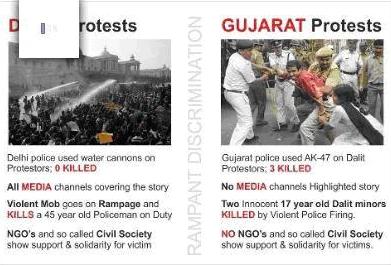
The incident got unusual media support and popular support because the victim is from the middle class family and the culprit from the lower class. The upper class people in Indiacan’t accept the idea of a lower class man raping a middle class woman, so they are offended greatly. Every day, similar atrocities are happening against the Dalits in India, but no one bothers.

The problem with this view is that the girl who was in the hospital (dead now), was not responsible for the “caste based” rapes that happen in India. Who am I to say that, right? Poor me! If we say Dalits are being raped every day and the victims are from the lower class family, and so he should be prosecuted and so on, I have only one silly, (yes, very silly) question, “Do you guys want reservation in rapes too?”

Another silly, (yes silly again) question, “Will the rapists ask for caste and community certificates while performing the heinous act upon your body?” Can I ask one more question? What about the people who protested in the streets of Delhi? Were they all from upper caste or upper class? Poor me, I can’t understand these theoretical analyses. I am just a human being, nothing but human. What I do have is just some crap of commonsense.   
Last month, exactly 16th of December, I bought Chennai Times and read the news about Jacintha Saldanha’s death, with an add attached with it: ‘if you want the latest update of the news and how Jessica’s parents feel about it now, just download our mobile app in your phone”. This says everything, everything that’s needed.

When I read the intellectualized versions of the rape victim of Delhi, (Jyothi or Amanda, whatever sentimental names TV channels call her) I felt shocked. The response of the police and the governments did not instill a different feeling in me. The ad that sells the feelings of the Jacintha’s family was yet another humongous shock. I am not used to such “adult material” in cruelty.

I read several Sci-Fi in which through some scientific experiments or so, humans are replaced by mutants, with extra-human powers. I would say, we already passed that stage, we are that mutants, who can’t feel those very human emotions, that of compassion, love, sympathy and so on. I myself, yes, I myself doing the same thing, raping it for the thousandth time… Oh, Lord, Forgive me for this Sin!
***

Article By—
Sarath Krishnan


For the first time in its history, The Indian Commentator is publishing a guest post by another author. This article is written by a friend of mine, Mr. Sarath Krishnan. When he mailed this article to me, asking to read it and let him know what I feel about it, I did not hesitate to ask him permission for publishing the article in my blog. It was more of a favour from his side to allow me the permission to publish it.

This article is delayed a bit in being published. One reason for this delay was the potential threat from governmental policies regarding how to handle the protests. The second reason was the involvement of political parties in the Delhirape issue. The protests, though began as an apolitical movement, later took a stringently political nature. The Indian Commentator is an apolitical space. It has no affiliation or opposition with any of the political parties in India or anywhere in the world. 

Today the whole of humanity, especially, Indian morality (the same morality that never lets a man walk with a woman) is ashamed on Delhi-girl’s death. Let’s pray for the peace of our own mind first and then the peace of her innocent soul.  

Read More
Posted in social | No comments

Thursday, January 3, 2013

Book Review: Caught-a novel by Harlan Coben

Posted on 5:53 AM by Unknown
“The world is nothing but a bunch of thin lines separating what we think as extremes.”(236) Harlan Coben; Caught.
Courtesy: Penguingroup.com

Caught is a novel that begins with a surprising twist in the destiny of a social worker. This opening part introduces another major character, a reporter. However, even after the twists in the beginning that could very well remind the readers that much would be coming in the following section of the book (and that is guaranteed), the rest of the novel, until the ending part, remains rather bleak for a thriller. In the case of some books, all is well that ends well.  The novel ends with three words; “I forgive you.” This sentence reflects happiness and contentment, a perfect way to end the book. The language of the book though, is not literary and is matter-of-fact. This could be substantial in creating a specific voice for the novel. Coben’s language has its influence upon readers undeniably; it takes the readers into its flow and rhythm. It is simple too. And it is this linguistic flow that kept me going most of the time, through the bleak parts of the thriller towards the most gripping and surprising end.

This is my first Coben novel for review. The prose is lucid and fast paced with sans philosophy and zero didacticism, but plenty of hard-to-believe-realism and zoomed in pictures of lives in American suburbs. Often it is seen that writers, as they gain their dominant voice among readers, find themselves tagged with labels. Such labels as, writer of ‘literary fiction’, ‘horror’, ‘historical fiction’, ‘historical fantasy’ (such as the books by Tim Powers), ‘suspense thrillers’, ‘legal thrillers’ (of course, a review of John Grisham’s The Confession will soon appear on this wall), and many others, create as well as destroy the ‘writerly’ spaces that are unique for each writer according to his or her subjectivity.

Labels have a paradoxical binary role to play. Within a label a writer may find himself adapted and indulge in a more focused production. However, sometimes, this very focus backfires and provides no options for the writer to work on something apart from the routine, even if he or she wants to go beyond what is their usual way of writing. This is much like the misery of the character Paul Sheldon from the novel Misery, by Stephen King. Obviously, it is market that creates such labels and governs the very system of professional writing.
Courtesy: Google Images

Harlan Coben addresses himself a writer of “suburban thrillers”. Suburban thrillers often show, “the same brownstone walkups where family life often occurred to be simultaneously the backdrop and setting of the most anti-social criminal behaviour and planning. With everyone living on top of each other in these tenements, a criminal caper could be hatched around the same table from which the kids were sent packing to bed.” Roger Westcombe writes this about the genre of suburban thrillers, which started making its presence a decade after World War II, in his article titled “Domesticity That Never Sleeps: the Emergence of the Suburban Thriller”. His words ring so very close to what Mr. Coben does in his books.

"You'll talk to some writers who write the serial killer book about people who hack up people for no reason - that's not me. The international thriller that reaches the White House? That's not what I do. My milieu is the neighbourhood, the family, suburban America - reflective of suburbia all over the world," Coben explains in an interview given to journalist Chris Wiegand of Guardian.co.uk. Coben was born in New Jersey and his novels reflect the setting of his own middle-class background.

Women become a significant motif in most of Harlan Coben’s novels that boast of its setting in the suburbia. In many of his novels a woman goes missing and a woman goes searching. Wendy Tynes, news reporter with the NTC news is one who is connected with the victims of the girl-missing, the central theme of the story, as well as responsible for nailing the case of the notorious Dan Mercer, a social worker and accused pedophile, the second theme of the story. These two cases converge, surprisingly and with elegant craftsmanship, into being Caught. The final three chapters and the Epilogue (pp: 379) unveils some unexpected twists in the plot in an endearing Harlan Coben simple-prose. The puzzle of death is reversed into the clarity and promise of new life.

A character, who offers an occasional punch to the story, without being under the spotlight, turns out to be crucial and the cross on the grave—Ed Grayson. His turn to be big and doer of significant things comes in the final chapter. His son was molested and used in the making of child pornography by his wife’s brother. But he had believed it to be Dan Mercer, the person snared by the media and masked as a monster. Dan Mercer, the social worker, was caught on camera in Wendy’s journalistic adventure at the start of the novel. When Ed Grayson realizes the truth later, he had to do the atonement. If I mention the events that lead Ed Grayson to his deliverance, that would bring a humongous spoiler upon the potential readers of Caught. There is nothing worse than a review with a major twist in the story bared in the dry and apathetic autopsy by the critic.

In Caught no character in particular carries the title of the protagonist. Two ideas, an accused pedophile on the run for his life, and a missing girl, become the binary of significance. It would not entirely be surprising if the readers find it difficult to tag a particular character the protagonist of this novel, I mean, those readers who are used with the style of writing novels with some character being at the epicenter of all the action, alone.

Wendy Tynes stays for a long time in the story and has a role in the main action, though not without any exaggeration of her own space in the story. She is the one who connects all the crucial dots at the end of the novel, for the readers. Wendy is a powerful woman, born out of fire, who had lost her husband in an accident, in the past. Wendy Tynes, in terms of her personality and relationship with other characters, can be proclaimed the hero of the novel. Coben relies on this character to solve the puzzles and nail tight what is left out from the main plot for the reason of maintaining suspense or due to the demands of other issues within the plot.
Courtesy: Google Images

Caught promises a lot about the writer. Harlan Coben’s suburban Americais not a complacent space of the bourgeois, but the location of brooding evil and unexpected human conflict. Caughthas an aesthetics that has direct bearings upon the middle class life in suburban America. Harlan Coben’s sense of ‘ordinary evil’ and ‘common place terror’ is remarkable. He is, sure to be, the one to look at, with full expectations, for a good book.
Read More
Posted in book reviews | No comments

Tuesday, January 1, 2013

Another Girl-Missing

Posted on 10:02 AM by Unknown
Pain never takes vacation. Here is another news of girl-missing. There is no telling what I feel or what any of them who are close to this girl feels. I do not think this is a time when we can think about sorrow and pain. This is time to act, to find them, all those missing from their homes, their families, and beloved ones.

Image Courtesy: Facebook
This is yet another instance of how social media can be of great help. I received this picture from Facebook. Here it is.
My review of Harlan Coben’s novel Caught comes next!  The waiting is over. The year 2012 came to a close and the next started off. There may be people who celebrated this shift, this change of speculative time. I am not one among them. I could not, and shall not. I felt hollow within myself. It seems my mind is just reflecting the intellectual and psychic vacuum of my nation, where any one can get raped and killed on open and justice is just a cliché.
Courtesy: Google Images

RIP Delhi girl. You are innocent, but you had to pay the price for trusting this nation. 
Read More
Posted in New, social | No comments

Thursday, December 13, 2012

Missing

Posted on 3:36 AM by Unknown
This is a recent case of girl child missing, from Star City, West Virginia, the United States.
This picture says it all. I uploaded it from my Facebook page.

I spotted this picture shared on one of my friend’s wall. I shared it on to my Facebook timeline from there, thinking it would be helpful for some aching hearts to find out where their only panacea, their lovely daughter, is.
Image Courtesy: Google
This picture has been added on this blog, to create more chances of finding Skylar Neese. And to let the family know people do care about them, even if they are miles away, on the other part of the world.

The news and search of Skylar Neese’s disappearance reminded me of a book I read about three months back: Harlan Coben’s novel Caught. I had announced a book review before two months on this book. Due to some reasons this review could not be posted until now. However, with this post my intention is to renew that promise and to let you know that the review will be out soon! Real soon!

Caught reflects on a lot of levels the agony, suspense and search in a similar missing case of a teenager. The search in the book turns pessimistic; that however, is not my point here, at all. It’s just the similarity in how a suburban family confronts such a situation that I found identifiable. Needless to say, this news of Skylar Neese generated my renewed interest in Caught.

The review will appear in another post.

May God bless the Neese family find their peace and happiness soon.
Image Courtesy: Google
Read More
Posted in social | No comments

Friday, December 7, 2012

Secrets of a Storyteller

Posted on 4:43 AM by Unknown
Image courtesy: Google
Teaching English at a local college provides me the necessary income for survival, since my books have not started their earning journey into the wide and wondrous world, yet. Still, I must say, teaching provides me not just money, but the experience as a person undertaking a professional responsibility. This experience amalgamates the innate creative impulses into a literary text exhibiting order, alignment, pattern and style, elements that are much needed in any writer’s success journey.  Even if I hadn’t taken this job up, I would have learnt these elements, but perhaps in the hard way, who knows.

Doing any other job, while pursuing a writer’s life, can bring to the surface a similar set of experiences that at a second stage, can culminate into a writing genius. I hope the story I am going to tell here, might influence, inspire and help move forward many like myself, who at some unfortunate turn in their lives, are forced to believe they are good for nothing. It is a debate that occurs in every mind, irrespective of one’s profession. Even if you are a writer, police officer, teacher, or doctor, at some point in your life, you must have taken this exceedingly inappropriate step to judge yourself. That their craft sucks would be the first impression they themselves are concluding with, if they are artists. Police officers might conclude, they are bad officers, blinding their eyes (for a moment or month or year—to whatever extent this feeling lasts, which in some people, until a messiah comes along and shows them the light of day) at those corrupt and indecent officers. For teachers, these days must be just as bad and hurtful as any other person. He might feel he is not worthy of the job.

As a teacher, I felt that too. I felt as if I was the worst teacher ever walked on the earth. This psychological upheaval happened occasionally. It was this June, when for the previous time it happened. It’s remarkable to see how the Universe kept its solution for the mental trap I was in, just within what I am, inside my self. I came back home one evening puzzled over the next step I should take, as it was clear teaching was not going to leave me any peace of mind whatsoever. When I opened my blog and thought of checking the comment box casually, I had not considered the possibility of anything else, not even a comment by some reader.

As you might have heard of, there are moments when fairies come alive and fire spitting dragons take us to new worlds—magical moments. In one such moment, I opened the comment box in my blog and there it was! A very positive comment on a book review I had written. The comment was just one line. It said, “You are a really good writer and inspiring too!” and nothing else. It felt like I was taken into some magical world by a dragon or this very world itself had just transformed and acquired a fantastical nature, for it was only in stories I had heard of such acute presence of coincidences! As a matter of fact, my self-doubt was washed clean by this single line of comment. The next day, I was a new person and had a lot of creative ideas to share. I felt, even if I may not able to make it to be a good teacher, I am doing great on another side of my personality, my writing.

But the same wall of doubt was due for the same personality I was so confident about on that day. Before long, I came across a situation where my short story collection could not even find a reply from the publisher I had sent it for publishing. It was clear the publisher had rejected it.

Perhaps dejection attracts a fair magnitude of dejection. There was no option, all my thoughts had tuned into the morbid frequency of hopelessness. Someone was telling me from inside that I should never write stories, they are worst; that I could not succeed as a writer. It was as if all other thoughts were unreal and hope was a fantasy. I denounced the writer in me. It was not because I found any fault with my writing though. Self-criticism felt good. I just felt consoled when I criticized myself. But the peace self-hurting gave me did not last long. Soon my mind was on high fire. There was a need to write that arose within me. I had to submit to that call, I felt strongly. However, without confidence and trust on what I do, writing was impossible.

I decided to help myself, to forgive myself for the failure I was. But to believe I still could write stories was impossible. In order to ward off these caustic thoughts, I resorted to reading self-help books. One day in college, I was reading a book on the dichotomy of form and formlessness and how through transcending the barriers imposed by the world of form one can enjoy everlasting happiness in the formless dimension of existence. A young girl came near to my table. I was sitting in the staffroom, in my table. The book in my hand, I was totally absorbed into the reading process that the movement of the student nearby did not create any response from my senses. I noticed her only when her voice was identified by my ears and my mind decoded her presence.

She asked what I was reading. What she wanted to know was if this book was fiction. I remembered that in the previous class, I had discussed a novel about a shepherd boy, who took the courage to follow his dreams and ended up learning the Language of the Cosmos and Soul of the World. In that journey the shepherd boy had also found the love of his life. The story had been of great interest to the young adult students, and I knew it would be.

The girl stood in front of me. I remembered, how this same person had, after that class once I discussed the novel, asked me for the copy of the novel. I could not, however, give her the book, as it was my personal copy and due to reasons I deem exceedingly psychological, I never consider lending my personal copies of books. She must have thought this was the same book in my hand now. I told her that was a non-fiction book I was reading.

Once I told her what the book was about, she had a surprise expression on her face. Her eyes went wide. She then explained why she considers it a very dignified act to read non-fiction. Her words took a confessional turn first. She said she did not read much non-fiction books other than her text books, mostly because she did not know how to remember in a sequence, the ideas in a book that is written without a story to connect all those ideas. She said this was a question she always thought about, but could not find an answer for and so avoided generally, the genre of non-fiction. Then she appreciated me for keeping such a wide variety of tastes in books. Before leaving, she asked two questions. Can I keep what I read in memory, even if it’s non-fiction? And how do I remember what I read?

I answered her something like—it worked in a complex manner. The ideas inside the book are elaborated in a sequential order. So one can remember what one reads even after one had finished reading the book, through connecting ideas and linking their connections. She left the staff-room  wishing me a good day. That turned out to be a magical moment and a very good day, indeed.

The answer I gave that young girl was the answer I needed myself, desperately. The way I remembered the ideas and concepts from the non-fiction book was through creating sequences of ideas, sometimes following the same lead and order given in the book and sometimes through creating my own order of concepts. This sequencing happened internally and as a matter of fact, I never was conscious of this internal activity. At that moment, this internal and unconscious process revealed itself in front of me. It was simple. I would create some categories and put the ideas into different categories as per their nature, importance as well as significance in my personal view. There were other ideas, which I found now, connected with what I read in the current book, which were not actually part of that book. This happened by connecting similar ideas that I had heard of or read in other places. This too was an unconscious process.

Thinking about how this chain of responses happens unconsciously, one can discern a hidden symmetry in this process of connecting ideas and creating an internal sequence of them. This symmetry is very much the essence of a fictional story. There must be structure, which will give order to the story and that can only be achieved by sequencing the events. This will follow another step; connecting the characters with events. So in a close analysis of the processes involved with writing a story and the internal processes involved with remembering what we read in books, we can observe a striking similarity.

On that day, in the staff-room at the local college I realized, there is a hidden storyteller in each one of us, and an excellent one, for to achieve such a complicated sequence and order in our minds, to whatever we read cannot be work of just a naïve.

We all can bring that veiled storyteller out into daylight. Only, one should be prepared to deal with one’s success!  
Image Courtesy: Google
Read More
Posted in fun, social | No comments
Newer Posts Older Posts Home
Subscribe to: Posts (Atom)

Popular Posts

  • John Grisham in India?
    John Grisham Image Courtesy: Google John Grisham is America ’s beloved writer. He writes legal thrillers that until a certain period in my l...
  • We’re the Millers: Is Jen hot or Emma?
    Warning: Spoilers ahead. Image Courtesy: Google A minor drug dealer, David Clark, one day, loses all his money. He has only one option; to ...
  • Plexus
    There is always a new book awaiting. One I have just finished; The Box by Gunter Grass. I stand up from my office chair. Like all office c...
  • Pea for English
    Image Courtesy: Google On 29 August 2013, I crossed a milestone in my teaching career. I planted a pea plant in the English class, literall...
  • The Buddha and the Terrorist
    Once the US senate unleashes the verdict, Syria will burn with missiles and bullets. The world is about to witness one more grand show of ju...
  • A Special Sunday
    Image Courtesy: Google Kalesh , an old friend of mine, entered into the confluence of marriage yesterday, in what I can surely expect, a wo...
  • Petrol Price Hike: Revelations
    Discretion advised   Irikkur-Tellicherry Road: on a quiet day When the price for petrol was increased, I thought the world would end. The ...
  • The Sky Rains Down
    The nomad curses sunlight, He takes shelter under a cloud, And gazes at the sky, Waiting the stars to shine. After the wind that reminded o...
  • What Type Are You?
    The first part of the book is titled ‘The Extrovert Ideal’. As I plodded through Part One, I felt more drawn towards the tactics and means e...
  • The Racketeer Book Review; Published Soon
    Image Courtesy: Google “I’ve seen this a hundred times in movies, TV shows, and in real-life court reporting—the last, frantic farewell look...

Categories

  • A tale untold yet (1)
  • book reviews (35)
  • Celebrations (24)
  • films (23)
  • fun (19)
  • international (11)
  • Life Scrap (57)
  • LOVE (26)
  • Nature (9)
  • New (39)
  • poem (68)
  • Short Fiction (74)
  • social (61)
  • sports (9)

Blog Archive

  • ▼  2013 (126)
    • ▼  September (8)
      • Buddha Strikes
      • The Disease of Extroversion: Noise Vs Silence
      • The Buddha and the Terrorist
      • What Type Are You?
      • We’re the Millers: Is Jen hot or Emma?
      • Pea for English: Follow Up
      • Petrol Price Hike: Revelations
      • A Special Sunday
    • ►  August (26)
    • ►  July (22)
    • ►  June (9)
    • ►  May (16)
    • ►  April (24)
    • ►  March (10)
    • ►  February (4)
    • ►  January (7)
  • ►  2012 (67)
    • ►  December (4)
    • ►  November (5)
    • ►  October (4)
    • ►  September (2)
    • ►  August (4)
    • ►  July (8)
    • ►  June (8)
    • ►  April (3)
    • ►  March (8)
    • ►  February (12)
    • ►  January (9)
  • ►  2011 (101)
    • ►  December (9)
    • ►  November (3)
    • ►  October (4)
    • ►  September (14)
    • ►  August (8)
    • ►  July (7)
    • ►  June (11)
    • ►  May (8)
    • ►  April (8)
    • ►  March (10)
    • ►  February (5)
    • ►  January (14)
  • ►  2010 (6)
    • ►  December (6)
Powered by Blogger.

About Me

Unknown
View my complete profile